The catalogue
The Catalogue
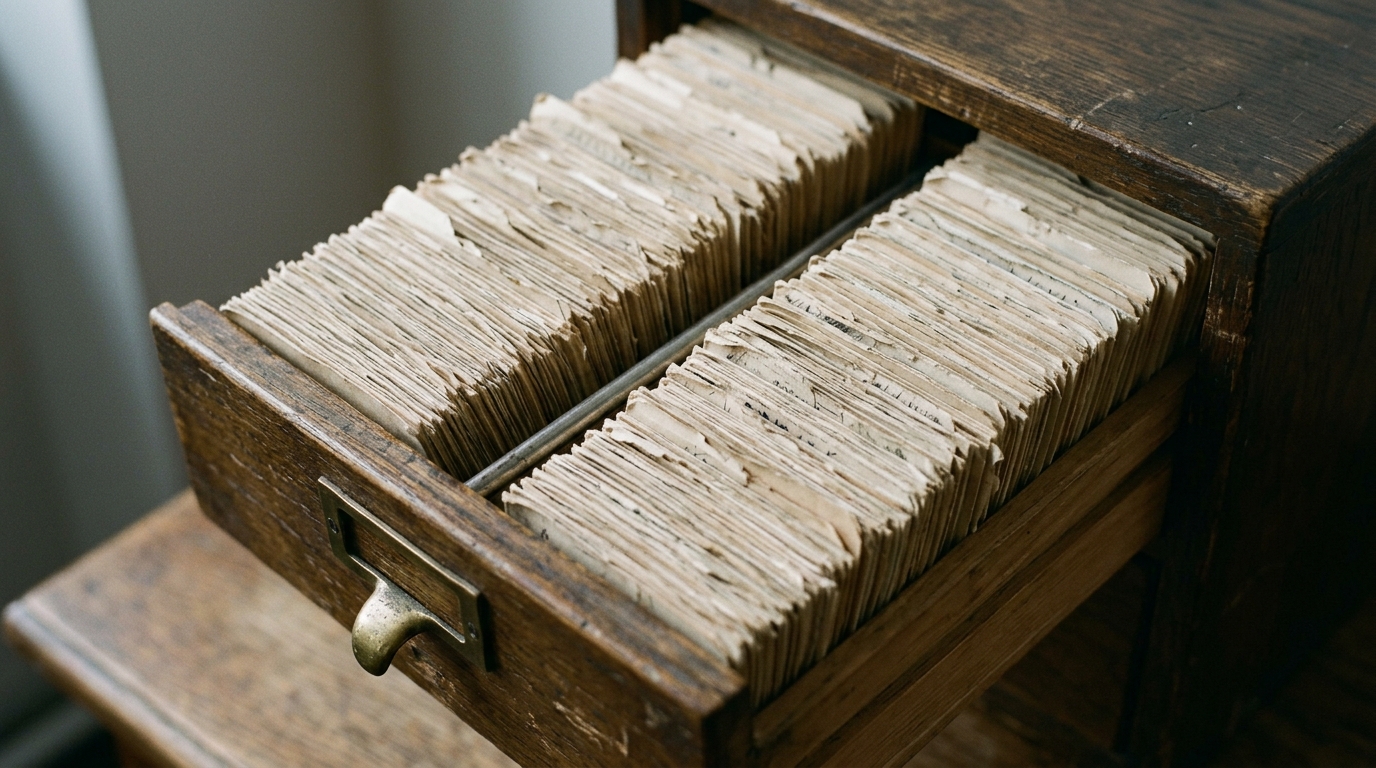
Ten cards, five layers, oldest first. The layer is not a period of history. It is who was doing the naming, which is a different and more useful thing to sort by.
Ford
The crossing words that came before the city
- Wacca Pilatkafrom a Creek or Seminole phraseThe phrase behind every later name for this place, and the part of it that is genuinely uncertainFordrecorded by the 1700s
- Cowfordwas Wacca PilatkaA description that everybody used and nobody ever made official, which is a distinct thing from a nameFordin use through the late 1700s and early 1800s
Crown
The Spanish and the French periods
- St. Nicholaswas San NicolasA Spanish name that changed because English speakers kept saying it the English way, with no decision anywhereCrownSpanish period, anglicized through the 1800s
- Mandarinfrom English, from the name of a fruitA district named after a citrus variety, and the part of that story the records actually supportCrownfixed in the 1830s
Territory
Territorial government, and the army
- Jacksonvillewas CowfordTwenty surveyed blocks, a petition in June 1822, and a man who never came to see the place named for himTerritoryJune 1822
- Talleyrandfrom French, a surnameA French foreign minister on an American street sign, and an entry where the honest answer is that nobody knows who put him thereTerritoryattached in the 1800s
Rail
The railroad decades
- Baldwinfrom English, a surnameA railroad junction named for a doctor, and one of only four places that kept its own name in 1968Railfixed in the railroad decades of the mid 1800s
- Riversidefrom English, descriptiveFive hundred acres, ten thousand dollars in gold, and a federal document that contradicts the story the neighborhood tells about itselfRailplatted in 1868
Plat
Subdivisions drawn between 1900 and 1925
- San Marcowas South JacksonvilleA Venetian square reproduced by a developer in 1925, and a name that later spread over a whole former cityPlat1925
- Murray Hillfrom English, a borrowed district nameA name imported from another city, a town of its own for nine years, and a commercial street that exists because of a streetcarPlat1906
How to use the five layers
Read the layer heading before the card. It tells you what kind of act you are about to look at, and the kind of act determines what evidence can possibly exist.
Ford names were spoken. There is no document to find, ever, and a confident date for one is a warning sign rather than a finding.
Crown names changed by erosion. Expect two spellings overlapping for decades and no moment of change. The absence of a moment is the finding.
Territory names were applied on purpose by people with authority. These are the entries where a date and a document should exist, and where this register is most confident.
Rail names came from a company's own roster. Look for company records rather than municipal ones.
Plat names came from developers selling land. Look for plat books, and expect the name to say more about the year than about the ground.
What each card carries
The name in use now, the name it replaced or the language it came from, one line about what makes the entry worth reading, the layer, and the year. Nothing on a card is a recommendation and no card ranks anything.
Two cards carry a struck through name, which means a documented predecessor: Cowford under Jacksonville, and San Nicolas under St. Nicholas. The rest show the language instead, because nothing recorded was displaced.
The gaps, listed once in one place
- Talleyrand has no established Fixed by. No plat or municipal record naming the street has been reached.
- Mandarin has an origin every source agrees on and no document performing it.
- Murray Hill has the same shape: a borrowed name, and nobody named as choosing it.
- Baldwin has a physician whose exact connection to the line varies between accounts.
- San Marco rests on local historical writing rather than a federal nomination, because there is no historic district here to have produced one.
Five gaps in ten entries, stated on the entries themselves as well as here. Corrections is how any of them gets closed, and a reader who can name a document is doing this register a favor.